© 2026 Casey Spitnale
Chapter 3
The Drone
A Life of Sacrifice
“Better to have a superabundance of 10,000 drones than the queen fail to meet one.”
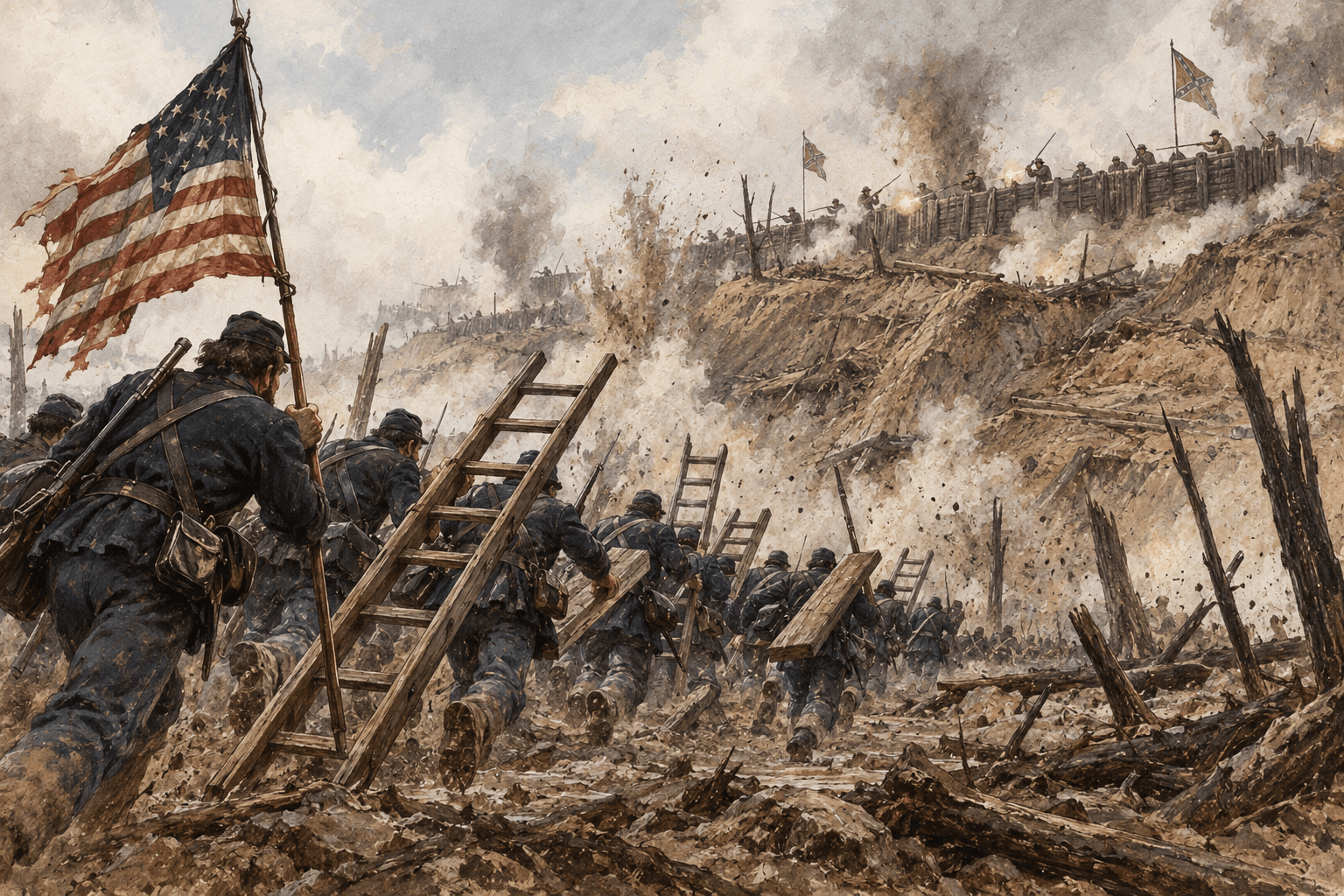
The chapter opens with Casey's sons handling a drone bare-handed, unafraid once they learn he has no stinger, and that unthreatening softness turns out to be the whole point of him. A drone exists for one flight he may never get, mating with a queen from another hive, an act that kills him instantly if it happens at all. Heather Mattila and Thomas Seeley's 2007 study gives that single flight real weight beyond sentiment. Colonies built on a queen who mated with many different drones survived winter at roughly 25 percent; colonies built on one drone's genetics didn't survive at all. The variety those hundred drones exist to offer isn't decoration. It's the difference between a colony living and dying. Casey pairs that with the drone congregation areas where males gather to wait for queens, the same patches of sky used for close to two hundred years running, even though no drone alive today has ever been to one before and none will return to tell the next generation where it is. Nothing is passed down. The design is just built in, year after year, to show up ready in the same place. That readiness carries real risk, the kind Lundie's 1925 hive counts put at roughly 120 times higher outside the hive than in it, and Casey sets it beside the men who volunteered for Vicksburg's "forlorn hope" in 1863, knowing the odds and stepping forward anyway. Most drones, like most of those volunteers, never get their moment. The chapter's claim, tied to Luke 12:35-36, is that the waiting itself is the calling. Whether the moment ever comes isn't the point.
Bee Science
- Drone share of the colony
- among roughly 50,000 bees in a colony, only about 100 are drones, each existing for a single purpose: mating with a virgin queen from another hive
- Genetic diversity and winter survival
- colonies headed by naturally-mated queens (genetically diverse offspring) grew faster, stored more food, and raised more drones the next season than colonies with genetically uniform offspring; by spring, about 25% of the diverse colonies survived winter versus 0% of the uniform colonies
- Drone Congregation Area (DCA) persistence
- one DCA has held the same patch of sky for almost 200 years, despite complete generational turnover every year, since no drone survives to revisit it
- Risk of leaving the hive
- of about 2.4 million exits tracked over 89 days, roughly 3 of every 100 bees that flew out never returned; a bee outside the hive during flight hours ran about 120 times the chance of dying that she ran inside it
Cited research (5)
- Heather Mattila & Thomas Seeley, "Genetic Diversity in Honey Bee Colonies Enhances Productivity and Fitness," Science 317(5836):362-364 (2007): Compared naturally-mated (genetically diverse) vs. instrumentally-inseminated (genetically uniform) queens' colonies; genetic diversity was the decisive factor in winter survival
- G.D. Tribe, "Drone Mating Assemblies," South African Bee Journal 54:99-100 (1982): Source for the ~200-year DCA persistence claim, cited by name in the chapter
- Alberto Galindo-Cardona et al., "Landscape Analysis of Drone Congregation Areas of the Honey Bee, Apis mellifera," Journal of Insect Science 12:122 (2012): DCA locations correlate with terrain, light, and wind-shelter, reinforced by an aggregation scent once drones gather — not drone memory, which is impossible given yearly turnover
- R.W. Currie & S.C. Jay, "The Influence of a Colony's Queen State... on the Acceptance and Longevity of Adult Drone Honeybees," Journal of Apicultural Research 27(4) (1988): A queenless or broodless colony stops feeding drones and evicts them fast; a healthy, queenright colony tolerates them far longer, into autumn
- A.E. Lundie, "The Flight Activities of the Honeybee," USDA Bulletin 1328 (1925): Electric-gate hive counters tracking roughly 5 million bee trips found leaving the hive carries about 120x the mortality risk of staying inside
Scripture
Anchor: Romans 1:20
Also touches
Civil War Recordcivil war
Vicksburg's 'forlorn hope' storming party, May 22, 1863
- During the second Union assault on Vicksburg's defenses on May 22, 1863, Sherman called for volunteers to form a 'forlorn hope' storming party to go first, carrying ladders and planks across open ground under fire
- Only single (unmarried) men were accepted; roughly twice as many volunteered as the 150 needed, and the surplus had to be turned away
- 19 of the 150 died in the assault that morning, 34 more were wounded, and the attack still failed to take the Confederate works
- 78 of the 150 were later awarded the Medal of Honor
- The 1st Maine Heavy Artillery garrisoned the Washington forts from August 1862, was converted to infantry in spring 1864, and on June 18, 1864 at Petersburg, about 900 of them were sent alone across open ground when the veteran regiments beside them didn't advance; in under twenty minutes it lost 604 men killed and wounded, more than any other regiment in any single action of the war
Primary sources (2)
- Emerging Civil War, 'The Forlorn Hope at Vicksburg' and 'The Forlorn Hope'
- Facts about the Civil War (Civil War Centennial Commission, 1960); American Battlefield Trust, 'A Futile Charge'; Emerging Civil War (1st Maine Heavy Artillery garrison history)
verified
From the Book
I gently cupped a drone in my palm during a family hive inspection. The fat male bee, nearly twice the size of his sisters, sat calmly in my hand, his large eyes reflecting the afternoon sunlight like dark jewels. I turned to my oldest boys. "Do you know what this bee is?" "A drone," they both said. A low, rhythmic buzz surrounded us. They'd both studied up. I'd told them that if they read a bee book, I'd buy them their first beekeeping suit. Which they did in a week. "The male bees are harmless," I explained, watching their fascination start to win out over their fear. "God designed them differently. They have no stinger, no way to hurt you." They were hesitant to touch him at first, but curiosity ultimately prevailed, as it often does with children. The second a finger actually brushed his thorax, he'd had enough of us. He lifted off and buzzed away over the fence line, and the boys just laughed and watched him go. The drone's distinctive appearance suggests intentional design rather than a deficiency. His robust body and enlarged eyes, which nearly touch at the top of his head, are not random outcomes but are designed for his unique purpose. In my early days of beekeeping, I noticed his differences not in what he lacked, like stingers, pollen baskets, and wax glands, but in these specific traits. His deliberate movements across the honeycomb contrast sharply with his busy sisters, who hurry past in their work, and it's not because he's lazy. It's because he's fat. He eats constantly, all day, every day, packing away honey like he's training for an event that may never come, because in a way, he is. It's a strange kind of readiness: the slowest, roundest bee in the hive is also the one standing by for the one moment that matters most.
Get the full book →